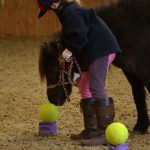
How Equine Assisted Learning can help support children’s emotional development
Here at Inspired Equine Assisted Learning, we are incredibly passionate about helping people. We are currently involved with an EU project which assists children’s development. The project – ‘Grow up with sports activities – social and equal opportunities’ (GWSASEO), is to raise the involved organisation’s capacities to promote social inclusion. By implementing sport activities and services including children and young people with intellectual disabilities and to use sport as a driving force for social inclusion. The main objectives of this project are:
To develop and to reinforce networks
To increase the capacity to operate at transnational level
To confront ideas and methods in different areas relating to sport and physical activities
Exchange of good practices
With this in mind, in this blog we explore the benefits of Equine Assisted Learning in supporting children’s emotional development.
For thousands of years the bond between humans and animals has proven to be effective in creating an emotional and healing rapport. Equine Assisted Learning is an incredibly powerful tool in assisting children’s emotional development. It is particularly useful in helping children with learning disabilities, behavioural challenges and autism as well as children who have suffered violence or sexual abuse. Horses are naturally social animals and they have their own personalities, attitudes, moods and even fears, they are also excellent at sensing the feelings of those around them.
Horses are prey animals, their heightened sense of predators means that they are sensitive to non-verbal communication from the people (and animals) around them.
As a result, horses give people feedback on their interaction, which offers individuals an opportunity to self-regulate. Horses are able to offer children an insight into themselves and their interaction with those around them.
Equine Assisted Learning can be especially beneficial to children who often react with anger or frustration. A horse will react negatively to negative emotions. For example, if a child is angry, frustrated or acts aggressively, the horse will startle and retreat. This is a significant teachable moment for a child. The negative reaction from the horse can help a child see what kind of impact their behaviour has. Horses do not willingly respond to orders delivered in an aggressive or bullying manner, thus forcing children to find another, more productive way of communicating. As the children begin to gain the trust of the horse, they develop new ways to communicate as well as learning how to control their anger or frustration.
An important aspect of emotional development is confidence and leadership. Horses are very powerful animals, and they can be intimidating. Approaching and interacting with a horse helps children to confront their insecurities. This helps children to understand how to remain calm even if they have a feeling of fear or lack of confidence. This can be an extremely empowering experience for children.
Children who are very shy and timid may have little to no impact on the horse, Equine Assisted Learning can be used to develop self-confidence and to help teach children to use their voices and bodies to greater effect. Seeing the changes in the horses behaviour as a result of the children becoming more confident, using their voice as well as non-verbal communication, helps to inistil confidence.
Caring for horses requires children to develop new skills. When a child learns a new skill, they develop self-confidence and trust. As a result of working closely and caring for the horses, children often develop an emotional connection/bond with the horses.
This connection encourages children to control their behaviour around the horse, so as not to upset an animal they have come to care about. As a result, children learn a more positive way of communicating, often requiring them to think about the horse’s needs, or putting themselves in the horse’s position in order to decide how to proceed. Teaching children to think about the needs of others is an important emotional skill to develop.
The relationship between a child and a horse during grooming, feeding or handling a is such that the child is not thinking about themselves, but rather they are in the moment, thinking about the needs of the horse. This helps the children to pay mindful attention to the present moment.
Equine Assisted Learning and the interactions with the horses help children develop a better understanding of their emotions and how to deal with negative ones. Seeing the feedback from the horse allows children to understand the impact of their behaviour on others. As the relationship develops further, children begin to see how the horse reacts in a positive, attentive and cooperative way. The children will have developed new skills to deal with their own emotions and understand how to effectively communicate, gain trust and also how to control anger, frustration or stress.